






When Joel Diamond appeared at Carnegie Hall in 1982, playing the keyboard for the singer Jane Olivor, he told his parents, Ben and Lil, that he had rented a limo to bring them to the show. His father asked, “What’s a limo?” Joel told him that a limo was a big car. So, his parents were whisked away in a big car to Carnegie Hall, where they sat in the middle, close to the front of the stage.
Jane Oliver came onstage first. Next came Joel Diamond. Lil stood up in the audience, and shouted, “That’s my son! That’s my son up there!”
After the concert, Diamond had made reservations for his parents at the Russian Tea Room. Lil complained about the prices on the menu, and refused to order food, so the waiter made her sit at the bar. Lil said she could not enjoy her son spending so much money, and explained, “I’m from Yonkas!”
How Joel Diamond came to play at Carnegie Hall is a Yonkers story that began at the Hammond Organ Store on Nepperhan Avenue. Diamond was born blind in one eye, but when he walked into the organ store, he could play the keyboard. He was a prodigy.
His passion for music led him to teach himself. He waited until his parents left for work; he’d stay home and skip school. He spent the entire day playing the organ. His high school music teacher came to his house and told his mother, “Mrs. Diamond, I want to let you know that your son hasn’t been in school for two weeks.”
By the time he was thirteen, he began working professionally.
Yonkers was a very musical town. Diamond played in every band in Yonkers. While he was originally self-taught, he sought sophisticated instruction. Music became his one-way ticket out of Yonkers. He went to the Berklee School of Music in the mid-seventies during the time when Boston was beset with riots.
He drove himself hard and studied with the jazz pianist Sanford Gold. He also studied with the legendary Madame Chaloff, from whom he learned “the Russian method,” a technique of pressing each piano key so that key never touches its lowest position, and retains its resonance through to the next note. The spiritually predisposed Madame Chaloff dazzled her students with her emphasis on breath and weightless arms, fluttering bird-like in the air.
Joel Diamond took high-profile rock 'n' roll jobs with artists like Joan Jett, Felix Pappalardi, and Graham Parker, and often toured with them. He also went on the road with the English guitarist Mick Taylor, who had launched a solo career after a long stint with the Rolling Stones. The money was good but Diamond didn’t care about the money. All that mattered was the music.
A regular at the Possible 20 Bar on West 55th Street, Joel Diamond knew every musician in New York and played with all of them. Possible 20 was the go-to pub for studio musicians. Musically versatile, Joel Diamond was widely respected and known as a great pianist and accompanist, a musicians’ musician.
One former girlfriend describes Diamond in those days as looking like a Hassidic punk rocker. In his early years, he cropped his hair to be the same style as the artist Egon Schiele.
Later, he developed a penchant for wearing Fedoras, Borsalinos, Soho hats, and backward caps. Suit-wise, he preferred a perfect fit. His suits were made at Jodamo on the corner of Orchard and Grand.
Once he was scoring a film for the Denver Symphony, and had to conduct the orchestra. He was getting pissed, and started saying, “Fuck, Shit! Fuck this and Fuck that. Let’s do this again.” The conductor called him into the control room and said, “We don’t use that kind of language here.” Diamond told him, “This is the vernacular that I grew up with and if you don’t like it, then Fuck you.”
By the end of the session, the formal, classically-trained musicians were all saying, “Fuck this and Fuck that.” Diamond is quick to add, “They probably wanted to say that all along. We had the best time.” Admittedly, Diamond says, “I can be really silly.”
Yonkas speak, notwithstanding, Diamond’s ability to traverse being a musician, a composer, an arranger and a producer, brought him extraordinary opportunities. Defining his entire repertoire as eclectic or avant-garde is a misnomer. Diamond chose his projects regardless of musical genre or cultural certainty to push the edge beyond what is conventional in order to explore what is truly exceptional.
Diamond wrote the score for the film The Believer, written and directed by Henry Bean. The score’s fusion of traditional orchestral music and contemporary electronica garnered accolades. Variety selected Joel Diamond as one of 20 Creatives to watch.
He scored the film Delirantissimo, an experimental comedy directed by Alain Rimbert. Worldwide, the film won six awards for Best Score.
One of Diamond’s favorite film projects is Milarepa, directed by Neten Chokling, A tale of greed and vengeance, Milarepa is about a man who became Tibet’s greatest mystic. The film won an award for Best Spiritual Fiction Film at the European Spiritual Film Festival in Paris.
He was the musical producer and arranger for playwright David Mamet, most notably for the film Oleanna. He produced and arranged two albums for Mamet’s wife Rebecca Pidgeon. He also produced albums for other artists, including Livingston Taylor, and Sarah K.
The project near and dear to his heart was creating the score for the urban ballet Leonard And Minky. Choreographed by John Selya (Twyla Tharp, ABT) at New York’s Dance Theater Workshop, and narrated by none other than the nasal-voiced Mayor Ed Koch, Leonard And Minky is the balletic story of two cats. It’s fair to mention Joel Diamond’s own two cats were named Leonard and Minky.
Commissioned by the Cuban National Ballet to compose four pieces for the Compañía de la Danza Narciso Medina, his work “Seasons” premiered at the Guggenheim Museum in May, 2003. And his string quartet, "Danza Caprichosa", recorded by Orchestra Nova, was nominated for a Grammy award.
While Diamond started his career playing as a sessions musician, he felt compelled to raise the barre to see how far he could grow as a musical artist. He often downplayed his pursuit of serious orchestral music among his rock n’ roll and jazz colleagues, and was known for his work in the studio.
As a sessions musician, he worked with the jazz greats: Hazel Scott, American Latin Jazz bass player Victor Venegas, bass player Leopoldo Fleming, Jesus Silva, and Chris White, who was Dizzy Gillespie’s first bass player.
Diamond says he and Chris White were very close. “We had a spiritual ‘magical’ relationship. We would see things musically the same way.”
After recording sessions, the musicians ate together, and their conversations inevitably turned philosophical and spiritual. “That is what made it so interesting,” Diamond says.
Joel Diamond’s journey from working-class Yonkers to Carnegie Hall took more than prodigious talent. Diamond thinks a lot of luck was involved and his success had a lot to do with the people he met along the way. He said, “I have this strong faith in God because there are too many things in my life that are synchronistic.”
Remembering his gig at Carnegie Hall, Joel Diamond describes Jane Olivor as the most perfect, talented singer he had ever worked with. He couldn’t wait to do gigs with her. Her voice was so beautiful and her phrasing was perfect. They sold out at Carnegie Hall and more shows had to be added.
Diamond in the Rough is an essay in my collection Notes From the Working-class.
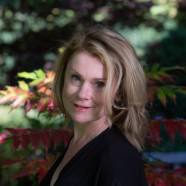
Patricia Vaccarino
Patricia Vaccarino is an accomplished writer who has written award-winning film scripts, press materials, articles, essays, speeches, web content, marketing collateral, and eleven books.