








With the Winter Olympics coming up next month, we may be deluded once again into believing in American exceptionalism. Drawn from a vast population, and trained to the nth degree, our high-performance athletes will be making their mark.
But if we take a closer look at the health statistics of Americans overall and compare them with other countries around the world, the U.S. simply does not measure up. According to the most recent data provided by the United Nations and published by the World Population Review, the United States ranks 62nd in the world for life expectancy, for example – falling behind the likes of Panama, Albania, Greece, and dozens of other nations. Other health indicators – infant mortality, alcoholism, obesity, suicide, and more – confirm our mediocrity.
So, yes – perhaps it is high time to shake things up in terms of American public health – to Make America Healthy Again!
Not that we’re off to an entirely auspicious start. When Donald Trump returned to the White House last year, he appointed an anti-vax advocate and former heroin addict to serve as his U.S. Department of Health and Human Services (DHHS) Secretary. Robert F. Kennedy, Jr. may not possess any professional medical experience to inform his decision-making, but he does know that the way to please his boss is by disrupting the status quo.
For starters, RFK Jr., with the assistance of DOGE guru Elon Musk, gutted DHHS programming and got rid of at least a fifth of the agency’s staff. Then in September, the White House published DHHS’s MAHA strategy report, a project that Kennedy had shepherded without providing the traditional courtesy of holding an advance meeting that would have allowed for public input. The report, which zeroed in on fighting childhood chronic disease, disparaged a century of “costly and ineffective approaches” before going on to tout strategic realignment and sweeping reforms.
The American Academy of Pediatrics (AAP), the Center for Science in the Public Interest, KFF, and Physicians for Social Responsibility were among the national medical organizations that Quickly identified some misstatements and omissions in the report.
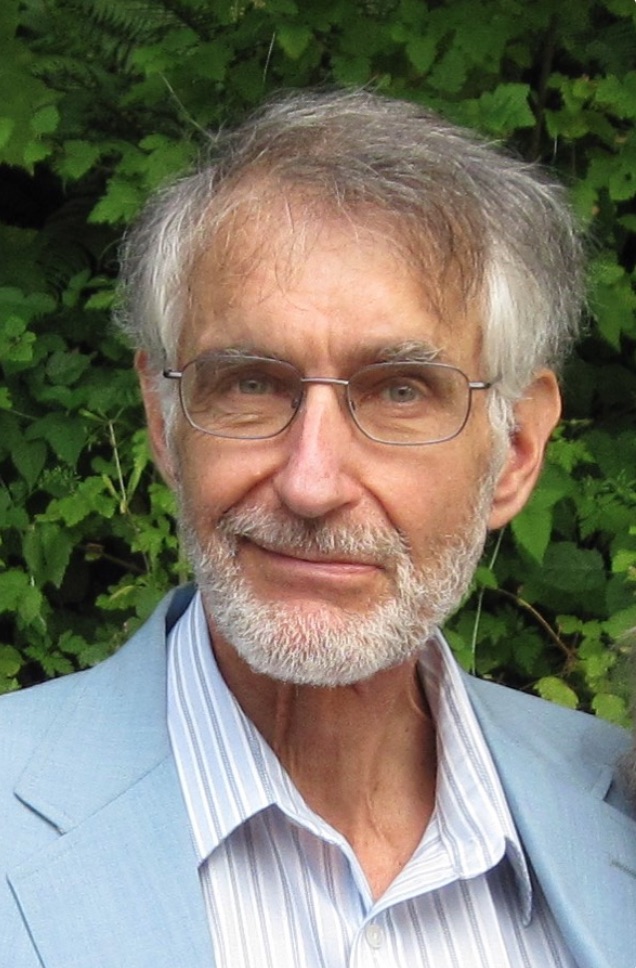
Dr. Stephen Bezruchka, a board member of the Washington (State) Physicians for Social Responsibility and a professor emeritus at the University of Washington’s School of Public Health elaborated on some of these perplexing disconnects in a radio program produced by RISE UP Alternative Radio.
“Given how the government has savaged the agencies comprising the Department of Health and Human Services, I can't see how there can be any progress to make America healthy again,” Bezruchka said. “Despite calling for much more research, funding for research has been drastically cut. Agencies such as the CDC have been emaciated and the newly installed director fired.” (The Centers for Disease Control operates under HHS’s purview.)
But in less than a year, the new DHHS Secretary has disrupted with impunity. Last May, without input from the CDC’s vaccine advisory committee and ignoring strong objections from the AAP, RFK Jr. removed COVID-19 vaccine recommendations for children and pregnant women.
Then in June, he abruptly “retired” everyone who had been serving on the nonpartisan vaccine advisory committee and replaced them with individuals who seemed to share his vaccine skepticism. That was confirmed this past December when the reconfigured committee convened a meeting that many observers characterized as chaotic. The new panelists voted to stop recommending the hepatitis B vaccine for newborns.
Also in December, Kennedy enlisted President Trump to make unfounded claims against the medically approved practice of allowing pregnant women to use Tylenol to treat fever or pain.
And adopting Trump’s habit of flip-flopping on positions, Kennedy hedged on his own statements regarding the safety of the Measles-Mumps-Rubella vaccine. It is no mere coincidence that there were well over 2,000 confirmed measles cases in the U.S. in 2025. That alarming number blasted past the previous 30-year highwater mark of 1,274 measles cases, which was reported in 2019 – during Trump’s first presidency. And that, too, was no coincidence. Fewer children are being vaccinated for MMR because vaccine messaging during Trump’s time(s) in office has been noncommittal and/or confusing. Additionally, with the increased dominance of social media as an information source, and the accompanying flood of un-fact-checked claims by unreliable influencers, parents have been stymied into inaction. Thought to have been virtually eliminated from the United States 30 years ago, measles has re-emerged as a deadly threat.
More unsubstantiated directives have arrived in this brand-new year. On January 5, the CDC announced that it was further slashing the recommended slate of immunizations for children by fully one-third. It recommended that among the remaining vaccines, some should be limited just to children considered to be in high-risk categories, while other vaccines that previously were part of the regular protocol could be administered now only after consulting with a health care provider.
The immediate response from a wide array of health care experts across the country has been that this rollback of a well-vetted and effective vaccination protocol is unprecedented, reckless, and likely to result in more child deaths.
The AAP swiftly released a statement that said, “The longstanding, evidence-based approach that has guided the U.S. immunization review and recommendation process remains the best way to keep children healthy and protect against health complications and hospitalizations.”
Other medical professionals have voiced concerns that the CDC’s new, multi-tiered scenario will cause more confusion for parents, resulting not only in lower vaccination rates, but ultimately even impacting the rate of production, availability, and cost of vaccines.
But all of the controversial activity at DHHS is just part of a growing set of public health concerns coming out of the executive branch of government.
And then there’s Congress.
Last summer, the so-called One Big Beautiful Bill Act squeaked through the House and the Senate with only Republican votes. OBBBA’s impacts will begin to be felt this year. According to Harvard University’s School of Public Health, widespread cuts in Medicaid will burden the neediest Americans with confusing new red tape requirements at the very least, and at worst will strip them of any medical coverage at all.
Another blow came at the end of last year when Congress allowed the Affordable Care Act to expire.
Signed into law in 2010 by President Barack Obama, ACA subsidies made health insurance accessible to a large percentage of previously uninsured Americans. The proof was in the pudding: by the beginning of last year, a record-breaking 24.3 million people had enrolled in the ACA Marketplace.
But Republicans had long maligned “Obamacare” as unwelcome government intervention in a free-market economy and, despite the ACA’s popularity, Republicans took a hard-line stance last year, refusing to extend the ACA or even offer a viable alternative. Speaker of the House Mike Johnson sent Congress home for the holidays without resolving the issue, which meant that when the ACA expired at the stroke of midnight on the last day of 2025, health insurance premiums for millions of Americans spiked up overnight. At double or triple last year’s prices, health insurance is going to be out of reach for many people in 2026. This almost inevitably will boot more people back into poverty.
So in these tumultuous times, where can people turn for legitimate advice on promoting improvements in public health? Let’s go back to public health expert Dr. Bezruchka, who has a few prescriptions up his sleeve.
For nearly a quarter of a century, Bezruchka alternated between working as an emergency physician in the U.S. and spending time in Nepal, where he collaborated with local doctors to provide more services in hard-to-reach areas throughout that country. The contrasts between the two different cultures were stark, and not necessarily in America’s favor. He began to recognize patterns in his emergency room work in the U.S. – where he repeatedly treated patients who seemed to bear the brunt of American society’s inequities. Bezruchka’s thinking began to transition from focusing exclusively on medical care to more broadly considering the health of communities. He headed back to academia, this time to study for a Master’s degree in Public Health.
The coronavirus pandemic, and the early mistakes made in its containment, treatment, and prevention, underscored his evolving perspective. In 2023, he came out with a book that laid out his evolving philosophy, Inequality Kills Us All: COVID-19’s Health Lessons for the World.
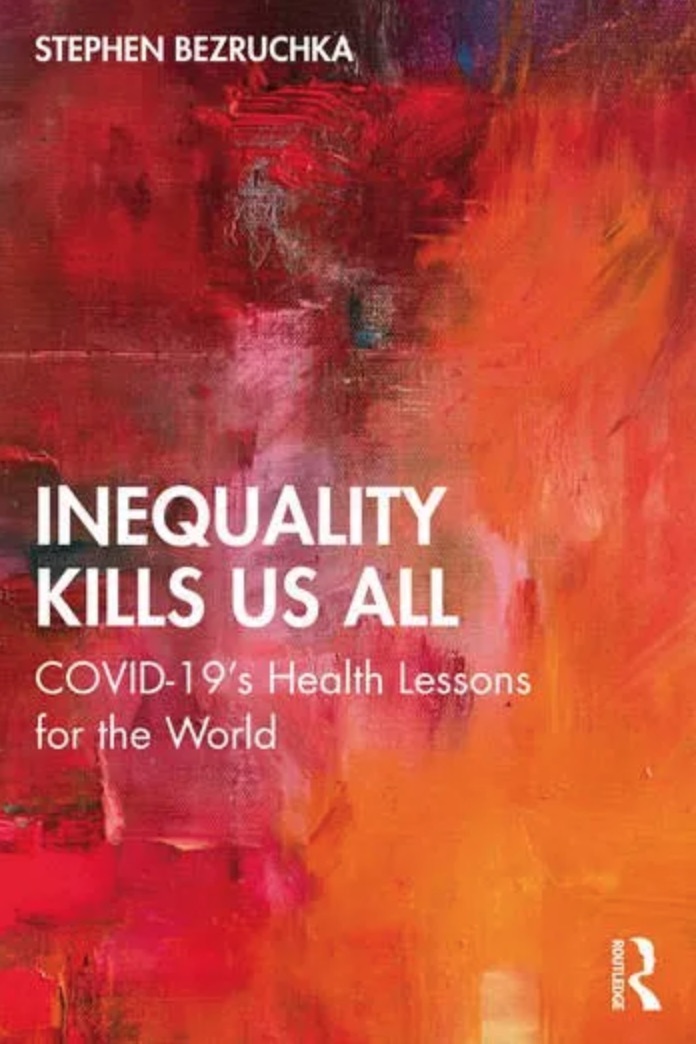
Chiefly, Bezruchka believes – as do his colleagues in Physicians for Social Responsibility – that there is a direct correlation between the United States’ decline in health markers and the ever-expanding gap between the haves and have-nots in this country.
Bezruchka thinks it is worth noting that the Trump Administration’s MAHA strategy report makes no acknowledgement of the health impacts of socioeconomic disparities.
“Living in America, we internalize the myth that we are all middle class and have equal opportunities…” Bezruchka writes in Inequality Kills Us All. “We make comparisons all the time trying to boost our self-esteem. We envy up and scorn down which produces tremendous collateral damage…. Those we envy have power and are desensitized to the needs of others below them. Scorn means you are unworthy of my attention. We don’t help those below us. We are very sensitive to status anxiety.
“In a competitive individualistic society,” Bezruchka adds, “we don’t want someone else to get ahead, because it means we have gotten behind.”
Think of the stress that’s bound up in that conception of self in relationship to others! It’s enough to make you want to binge on comfort food, drink your way straight through a six-pack of a strong IPA, or yell at that idiot driver who cuts in front of you on the freeway. It’s enough to raise your blood pressure. And all of that is plenty enough to make you sick.
But let’s also consider Bezruchka’s assertion from another angle. One wonders…
Is it too much of a stretch to imagine that scorn could have been linked to Republican Congressmembers’ willingness to vote for the One Big Beautiful Bill – even though it may strip up to 6 million of our most vulnerable Americans of their Medicaid coverage this year?
Was scorn linked to the Republican refusal to extend the ACA subsidies before they expired – though knowing full well that it would mean millions more middle-class Americans no longer will be able to affordable insurance?
And even if Congress should return from its holiday break ready to reach some kind of agreement that would reboot health care subsidies, that doesn’t erase the stress that was inflicted on the hundreds of thousands of families who were left in limbo over the holidays. Those were constituents who members of Congress had been elected to serve.
Bezruchka speaks out on public health not only to provoke, but also to provide solutions.
Acknowledging that Americans seem to be bred with a competitive streak, for example, he encourages readers to approach our nation’s lackluster health stats (compared to other countries) as a kind of Health Olympics – how can we improve the United States’ “scores” in longevity, infant survival, disease reduction?
To truly “make America healthy again,” Bezruchka says, we first must level the playing field, which at this point is grossly tilted to favor the richest of the rich. A new Oxfam study reveals that the ten top billionaires in the U.S. added more than half a trillion dollars to their assets in this past year alone. On the other hand, American households in the bottom 20% have gained less than $8500 over the past 35 years.
Which end of the spectrum would you guess is most stressed?
Now before we all pick up our pitchforks, let’s remind ourselves that this astounding inequity isn’t because those ten guys at the top are so much more deserving than we are. It’s because our nation’s policy-makers – the people whom we elected – have passed laws allowing this to happen: more loopholes for the rich, more penalties for the poor. (Keep in mind, every day in this country, homeless people get arrested for… being homeless.)
To act on Bezruchka’s advice, we’d need to start by insisting that rich folks pay their fair share of income tax, at both the state and the federal level. We could be reasonable about this. Maybe we could start with the billionaires: simply taxing them 90% after their first billion. This might disincentivize the fat cats somewhat, but just think what the redistribution of those funds to schools and libraries and playfields and parks and hospitals and housing and clean energy and environmental clean-up could mean.
Bezruchka’s next priority for improving the country’s overall lifespan is to devote more resources to supporting early life. Research shows that a healthy beginning leads to a healthier life overall.
“About half of our health as adults has been programmed by age 2,” he says.
Pointing to the countries that have scored higher than the U.S. in overall health rankings, Bezruchka notes that many of those nations have policies in place that fund actionable early-life supports. These include prenatal care for the pregnant mother to help the baby’s development in utero; substantial paid parental leave to encourage essential bonding between infant and parents; and state-run early-education daycare that is both high-quality and affordable.
So this doctor’s Rx for improving public health in this country is two-fold: reduction of economic inequality, and support for early life. These sound like reasonable, even pragmatic, building blocks. But you know what they have in common?
“Neither of these concepts are present in the material coming from Department of Health and Human Services,” Bezruchka notes.
Has America become so hyper-partisan that we’re incapable of availing ourselves of the evidence-based achievements that have come from our nation’s top research facilities, universities and brightest minds? Rather than allowing scorn to prevail as the operating principle, perhaps we can imagine the wonderful advantages that would accrue to us not just as individuals or cliques, but as a whole society, if we could work together toward better health outcomes for all.
Barbara Lloyd McMichael is a freelance writer living in the Pacific Northwest.

Barbara McMichael
Barbara Lloyd McMichael is based in the Pacific Northwest and writes about books and culture. She writes a syndicated weekly book review column called “The Bookmonger” that focuses on Northwest books and authors. Her PR for People® Book Review is written exclusively for The Connector.