










A biologically grounded approach to social justice is the middle-ground between capitalism and socialism. I call this new ideology “fair shares” and I propose a framework that includes three complementary principles: (1) goods and services should be distributed to each according to his/her “basic needs”(which have a concrete biological foundation); (2) surpluses beyond the provision for our basic needs should be distributed according to “merit” (a principle which I will seek to clarify); and (3), in return, each of us is obliged to contribute to the “collective survival enterprise” in accordance with his/her ability (under the principle of reciprocity). Though none of these principles is new, in combination they constitute a biologically grounded, ethical framework.
Darwin’s Darwinism Let us begin with Darwin. Twelve years after the publication of his masterwork, On the Origin of Species (1968/1859), Darwin published a second landmark treatise (The Descent of Man,1874/1871), one-half of which was devoted to the evolution of humankind. Darwin conceded that much of what he had surmised about our origins was guesswork, but it was anchored by his core evolutionary principle, “natural choice”, plus his extensive knowledge of animal behavior, his large collection of reports from around the world on “primitive” (mostly hunter-gatherer) societies and his observation of his own and other contemporary societies.
The so-called Social Darwinists, who used Darwin’s name to advance an ideologically tainted political agenda (often referred to as the “selfish gene” paradigm), evidently had not read The Descent of Man, or had not understood it, for their conclusions were orthogonal to Darwin’s own, more balanced views. Darwin’s vision of human societies was quite different from the “nature, red in tooth and claw” image that is so often associated with his name. The most important point about Darwin’s scenario is that he stressed the central roles of social cooperation, reciprocity and “mutual aid” in human evolution. In his words:
"Although man, as he now exists, has few special instincts, having lost any which his early progenitors may have possessed, this is no reason why he should not have retained from an extremely remote period some degree of instinctive love and sympathy for his fellows. Although man, as just remarked, has no special instincts to tell him how to aid his fellow-men, he still has the impulse, and with his improved intellectual faculties would naturally be much guided in this respect by reason and experience. In the first place, as the reasoning powers and foresight of the members became improved, each man would soon learn that if he aided his fellow-men, he would commonly receive aid in return. From this low motive he might acquire the habit of aiding his fellows. And the habit of performing benevolent actions certainly strengthens the feelings of sympathy which gives first impulse to benevolent actions....But another and much more powerful stimulus to the development of the social virtues is afforded by the praise and blame of our fellow-men...and this instinct no doubt was originally acquired, like all other social instincts, through natural choice."
In effect, what Darwin proposed was that natural choice operated at three different “levels” -- between individuals, between “families” of close kin and between social groups. Indeed, Darwin believed that competition between various "tribes" played a major role in shaping the course of human evolution. "Natural choice, arising from the competition of tribe with tribe...would, under favourable conditions, have sufficed to raise man to his high position." Groups that were the most highly endowed with intelligence, courage, discipline, sympathy, and "fidelity" would have had a competitive advantage, he argued. Alluding directly to the inherent tension in human societies between competition and cooperation, Darwin observed that:
"Selfish and contentious people will not cohere, and without coherence nothing can be effected. A tribe rich in the above qualities would spread and be victorious over other tribes; but in the course of time it would, judging from all past history, be in its turn overcome by some other tribe still more highly endowed. Thus the social and moral qualities would slowly tend to advance and be diffused throughout the world."
In sum, Darwin assigned a primary role in human evolution to the development of a well-integrated, intensely cooperating, morally grounded social animal. I will take my cue from Darwin.

The “Collective Survival Enterprise” The basic challenge that we all face, and the basic purpose of any organized society, is biological survival and reproduction. We are all participants in a “collective survival enterprise.” Each of us has no less than fourteen “basic needs” -- absolute requisites for our survival and reproduction over time. These needs are discussed in detail in my 2011 book, The Fair Society: The Science of Human Nature and the Pursuit of Social Justice.
These fourteen basic needs include a number of obvious items, like adequate nutrition, fresh water, physical safety, physical and mental health, and waste elimination, as well as some items that we may take for granted, like thermoregulation (which may entail many different technologies, from clothing to solar panels and air conditioning), as well as adequate sleep (about one-third of our lives), plus mobility, and even healthy respiration, which cannot always be assured. Perhaps least obvious but most important are the requisites for reproduction and the nurturance of the next generation.
Going forward, our global community must embrace a universal basic needs guarantee. The case for this is based on four propositions: (1) Our basic needs are increasingly well understood and documented; (2) although our individual needs vary somewhat, they are shared by all of us; (3) we are dependent on many others for the satisfaction of these needs; (4) severe harm may result if they are not satisfied. There is also much evidence that this has wide public support (see Corning, 2018).
However, there are two other important fairness precepts. Our basic needs must take priority, but it is also important to recognize the many differences in merit among us and to reward (or punish) them as appropriate. The principle of “just deserts” in our relationships is another way of viewing this. In addition, there must be reciprocity, a proportionate commitment from everyone to support the “collective survival enterprise.” We must all contribute a “fair share” to balance the scale of benefits and costs (see also Daly and Cobb, 1994).
“The Fair Society” Paradigm I believe that a three-part fairness framework -- equality, equity and reciprocity (I call it “The Fair Society” paradigm), coupled with global governance and the rule of law – is the model that we need for our emerging “global superorganism” (see Corning, 2023; also, Stiglitz, 2024a).
Indeed, we cannot rely on some charismatic, self-serving, authoritarian leader. The world tried this back in the 1930s, and it did not end well (World War Two). As the ancient Greek political theorist Plato (1946/380 B.C.) put it, more than 2,000 years ago, the problem with this alternative is how do you “control the controllers”? A better alternative is democratic governance under the rule of law, and a new global social contract. We must also make major changes/improvements to the United Nations and create new agencies with the authority and the resources to address our mounting global challenges.
In the 20th century, Plato’s famous warning against the seductive allure of demagogues/dictators was updated by the British wartime leader, Winston Churchill, who may have had Hitler and Mussolini in mind when he famously quipped (in a House of Commons speech on November 11, 1947): “Democracy is the worst form of government except for all those others that have been tried from time to time.”
Plato, in his early writings, envisioned a “philosopher king” – a leader who would combine the absolute power to govern with the dispassionate wisdom of a trained philosopher. He proposed this in his seminal political tract, the Republic (1946/380B.C.). Often overlooked, however, is Plato’s subtitle: “Concerning Justice.” His ultimate objective was to achieve a just society. Later on in his life, Plato came to realize that his philosopher-king concept was unrealistic and, in his last book, The Laws (1992/ca. 347 B.C.), he proposed a “second-best” alternative in which all interests should be represented, and everyone would be subject to the rule of law. The Founding Fathers of the American republic were students of the Greek philosophers and embodied Plato’s mature ideas in our Constitution.
American democracy is far from perfect. The electoral college provision is a big compromise/constraint, as is the U.S. Senate. There is also the deference paid to the institution of slavery, which culminated in our civil war in the 1860s. And, of course, there is the persisting influence of racial and sexual discrimination, down to the present day. Not to mention deep economic inequities and Gerrymandering – the partisan distortion of election districts. Today, in addition, there are deeply divisive policy differences among us and a resurgence of anti-democratic, authoritarian leaders. However, Plato/Churchill got it right. Even authoritarian leaders these days must use lies and sham elections to legitimize themselves. And they have a very poor record of good governance in the public interest.
The Root of the Problem Our current crisis has many contributing causes, but the root of the matter is modern capitalism – at once an ideology, an economic system, a bundle of technologies, and an elaborate superstructure of supportive institutions, laws and practices that have evolved over hundreds of years. Capitalism has the cardinal virtue of rewarding innovation, initiative, and personal achievement (merit), but it is grounded in a flawed set of assumptions about the nature and purpose of human societies. Its core values are skewed.
In the idealized capitalist model, an organized society is essentially a marketplace where goods and services are exchanged in arms-length transactions among autonomous “purveyors” who are independently pursuing their own self-interests. This model is in turn supported by the assumption that our motivations can be reduced to the efficient pursuit of our personal “tastes and preferences.” We are all rational “utility maximizers” – or Homo economicus in the time-honored term. This is all for the best, or so it is claimed, because it will, on balance, produce the “greatest good for the greatest number” (the mantra of the Utilitarians). A corollary of this assumption is that there should be an unrestrained right to private property and the accumulation of wealth, because (in theory) this will generate the capital required to achieve further economic growth. More growth, in turn, will lead to still more wealth.
The foundational expression of this model, quoted in virtually every introductory Economics 101 textbook, is Adam Smith’s invisible hand metaphor. As Smith expressed it in The Wealth of Nations (1964/1776): “man is…led by an invisible hand to promote an end which was no part of his intention. Nor is it always the worse for the society that it was not part of it. By pursuing his own interest, he frequently promotes that of the society more effectually than when he really intends to promote it…. In spite of their natural selfishness and rapacity…[men] are led by an invisible hand to…advance the interest of the society...”[i]
The classical economists who followed in Adam Smith’s footsteps embellished his core vision in various ways. One of these early theorists, Léon Walras, claimed that the market forces of supply and demand, if left alone, would work to ensure the efficient use of resources, full employment, and a general equilibrium. In other words, competitive free markets can be depended upon to be self-organizing and self-correcting, and the profits that flow to the property owners – the capitalists – will generate the wherewithal to achieve further growth and, ultimately, the general welfare. The modern economist Robert Solow (1957) summed up what has been called (sometimes derisively) “utopian capitalism” as a compound of “equilibrium, greed and rationality.”
An Odd Utopia The senior economist Samuel Bowles, in his book-length critique and re-visioning of economic theory with the unassuming title Microeconomics (2004), points out that capitalist doctrine offers an odd utopia. Its strongest claims are generally false; it is unable to make reliable predictions; it removes from its models many of the factors that shape real-world economies; it ignores the pervasive and inescapable influence of wealth and power in shaping how real economies work; and, not least, it’s profoundly unfair. It systematically favors capital over labor, with results that are evident in our skewed economic statistics and widespread poverty. Senior economist John Gowdy (1998, pp. xvi-xvii) candidly acknowledges that “Economic theory not only describes how resources are allocated, it also provides a justification for wealth, poverty, and exploitation.” (See also Porritt, 2005.)
It happens that two more socially responsible alternative models have emerged in recent years. One of them has the suggestive title, “stakeholder capitalism.” It calls for institutional arrangements that will equitably advance the interests of all the stakeholders in a society. In other words, merit is a major criterion.
The other alternative, proposed by the Nobel Prize winning economist Joseph Stiglitz (2024a, b), is what he calls “Progressive Capitalism”. He argues that the time has come to abandon what has also been called “neo-liberalism”, after such economists Milton Friedman and Friedrich Hayek, in favor of a model that better serves most citizens, including a social safety net – what FDR called the four freedoms – and, equally important, freedom from fascism. Progressive capitalism, which already exists in some countries, like Norway and Denmark, will better serve the greater good, Stiglitz argues.
The Fair Society Model However, I believe that a viable social contract for the longer term must be based on the concept of fairness, as detailed in my 2011 book, The Fair Society: The Science of Human Nature and the Pursuit of Social Justice (University of Chicago Press), A new global contract should encompass three distinct normative (and policy) precepts that are bundled together and balanced, in order to approximate the Platonic ideal of social justice. These three precepts are as follows:
- Goods and services must be distributed to each according to his or her basic needs (in this, there must be equality);
- Surpluses beyond the provisioning of our basic needs must be distributed according to “merit” (there must also be equity);
- In return, each of us is obligated to contribute to the collective survival enterprise proportionately in accordance with our ability (there must be reciprocity).
The first of these precepts involves a collective obligation to provide for the common needs of all of humankind. To borrow a term from the TV series Star Trek, this is our “prime directive.” Although this precept may sound socialistic -- an echo of Karl Marx’s famous dictum -- it is at once far more specific and more limited. It refers to the fourteen basic biological needs domains that are detailed in my book. Our basic needs are not a vague, open-ended abstraction, nor a matter of personal preference. They constitute a concrete but ultimately limited agenda, with measurable indicators for assessing outcomes.
A “Social Right” From this perspective, our basic needs cut a very broad swath through our economy and our society. Moreover, the idea that there is a “social right” to the necessities of life is not as radical as it may sound. It is implicit in the Golden Rule, the great moral precept that is recognized by every major religion and culture. Furthermore, numerous public opinion surveys over the years have consistently shown that people are far more willing to provide support for the genuinely needy than the Scrooges among us would lead one to believe. (Some of these surveys are cited in my book.)
Even more compelling, I believe, are the results of an extensive series of social experiments regarding distributive justice by political scientists Norman Frohlich and Joe Oppenheimer and their colleagues, as detailed in their 1992 book Choosing Justice. What Frohlich and Oppenheimer set out to test was whether or not ad hoc groups of “impartial” decision-makers behind a Rawlsian “veil of ignorance” about their own personal stakes would be able to reach a consensus on how to distribute the income of a hypothetical society. Frohlich and Oppenheimer found that the experimental groups consistently opted for striking a balance between maximizing income (providing incentives and rewards for “the fruits of one’s labors,” in the authors’ words) and ensuring that there is an economic minimum for everyone (what they called a “floor constraint”). The overall results were stunning: 77.8 percent of the groups chose to assure a minimum income for everyone’s basic needs.
The results of these important experiments also lend strong support to the second of the three fairness precepts listed above concerning equity (or merit). How can we also be fair-minded about rewarding our many individual differences in talents, performance, and achievement. Merit, like the term fairness itself, has an elusive quality; it does not denote some absolute standard. It is relational, and context-specific, and subject to all manner of cultural norms and practices. But, in general, it implies that the rewards a person receives should be proportionate to his or her effort, or investment, or contribution.
A crucial corollary of our first two precepts is that the collective survival enterprise in human societies has always been based on mutualism and reciprocity, with altruism being limited (typically) to special circumstances under a distinct moral claim -- what could be referred to as “no-fault needs.” So, to close the loop, a third principle must be added to the biosocial contract, one that puts it squarely at odds with the utopian socialists, and perhaps even with some modern social democrats as well. In any voluntary contractual arrangement, there is always reciprocity -- obligations or costs as well as benefits. As I have already noted, reciprocity is a deeply rooted part of our social psychology and an indispensable mechanism for balancing our relationships with one another. Without reciprocity, the first two fairness precepts might look like nothing more than a one-way scheme for redistributing wealth.
As detailed in my 2011 book, a greater emphasis on reciprocity in our society would include such things as a more equitable tax code, higher taxes as necessary to support the basic needs of the 30 million (plus) Americans who suffer from extreme poverty, and a lifelong public service obligation, beginning with a year of national service for everyone who is able to do so, or two years for those who receive special benefits like food or educational assistance.
Some critics might object to such incursions on their freedom, but philosopher John Rawls’s (1999/1971) classic definition of fairness under a social contract provides a definitive rebuttal, in my view: He wrote: “The main idea is that when a number of persons engage in a mutually advantageous cooperative venture according to rules, and thus restrict their liberty in ways necessary to yield advantages for all, those who have submitted to these restrictions have a right to a similar acquiescence on the part of those who have benefited from their submission” (call it reciprocity).
“The Future Lies Ahead” The ecologist Kenneth Watt observed many years ago that “the future is not what it used to be.” Indeed, our species is in serious peril, and the future starts now.. (See also Diamond, 2005, 2019.) We must urgently change the basic survival strategy of our species. The time has come for us to have a global social contract, because we are increasingly interdependent and are now facing massive and prolonged environmental challenges that most countries cannot cope with alone (especially if they start preparing for them only after the disaster has occurred). We must act collectively to build a sustainable global society – or else. Ideally, we should mobilize the needed resources, management systems, organizational capabilities, and trained workers before the crises occur, and we must have an “all-hands-man-your-battle-stations” response when they do. As The New York Times columnist Thomas Friedman warned, “later will be too late.”
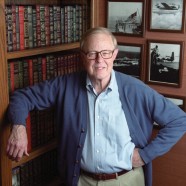
Peter Corning
Peter Corning is currently the Director of the Institute for the Study of Complex Systems in Seattle, Washington. He was also a one-time science writer at Newsweek and a professor for many years in the Human Biology Program at Stanford University, along with holding a research appointment in Stanford’s Behavior Genetics Laboratory.